
In sports, games, and competitions, rules are the foundation of fairness and integrity. Rules enforcement ensures that every participant competes on an even playing field, promoting equality, safety, and respect. Without proper enforcement, competitions risk bias, cheating, and confusion, undermining both performance and enjoyment. Understanding how rule enforcement works highlights its vital role in maintaining fair play.
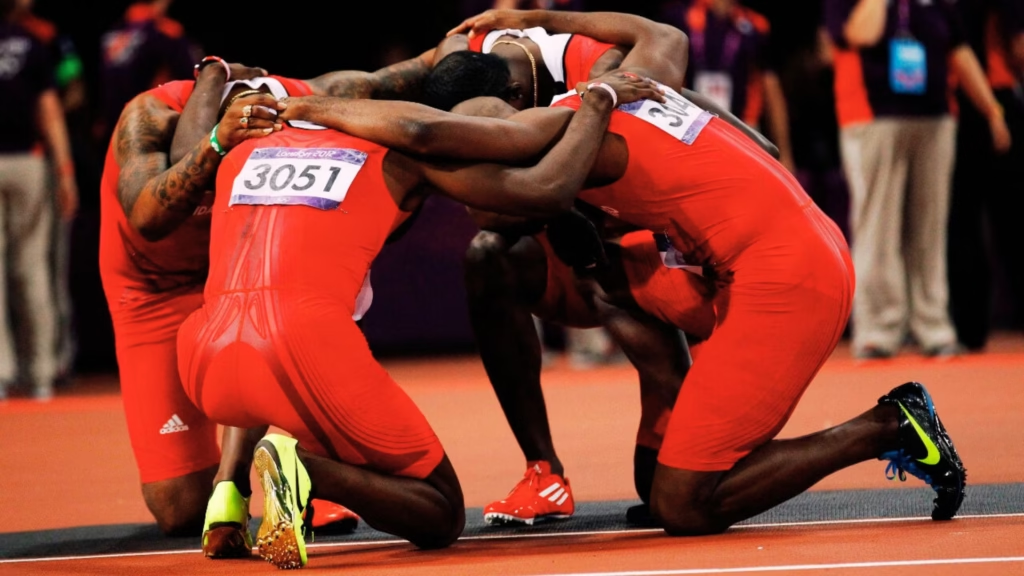
The Purpose of Rules in Sports
Rules are designed to provide structure, define acceptable behavior, and maintain consistency across competitions. They establish boundaries for performance, safety, and conduct. Some key purposes of rules include:
- Ensuring Fair Competition: Prevents one participant from gaining an unfair advantage.
- Protecting Safety: Minimizes the risk of injury for players and officials.
- Maintaining Consistency: Provides a standardized framework so that competitions are comparable across time and location.
- Promoting Sportsmanship: Encourages respect, integrity, and ethical behavior.
How Rules Enforcement Works
Rules enforcement involves monitoring, interpreting, and applying regulations consistently during a game or competition. Officials, referees, and governing bodies play a central role in ensuring compliance.
1. Officiating During Competitions
Referees and umpires are responsible for enforcing rules in real-time. They:
- Observe players’ actions and ensure adherence to regulations.
- Call fouls, penalties, or violations promptly and impartially.
- Apply corrective measures, such as awarding points, disqualifications, or warnings.
Consistent officiating ensures that all participants understand the consequences of breaking rules and maintains trust in the integrity of the competition.
2. Governing Bodies and Regulations
Sports governing bodies establish official rules and guidelines. They:
- Update rules to reflect evolving gameplay or safety concerns.
- Implement disciplinary measures for repeated violations.
- Provide training and certification programs for referees and officials.
This top-down approach ensures standardized enforcement across leagues, tournaments, and countries.
3. Technology-Assisted Enforcement
Modern sports often use technology to aid rule enforcement:
- Video Replay: Helps verify disputed calls and ensures accuracy.
- Goal-Line Technology: Confirms whether points or goals are valid.
- Wearable Devices: Monitor player performance, detect fouls, and prevent rule violations.
Technology complements human judgment and enhances fairness in competitions.
You Can Also Read: amateur-vs-professional-sports
Benefits of Effective Rules Enforcement
1. Maintains Fairness
Enforcing rules consistently ensures that no player gains an unfair advantage. This promotes trust and credibility in the competition and encourages healthy rivalry.
2. Protects Athletes
Rules enforcement reduces injuries and promotes safety. Regulations regarding equipment, conduct, and gameplay protect participants physically and mentally.
3. Enhances Enjoyment and Engagement
Fair competitions are more exciting and engaging for both players and spectators. Knowing that rules are enforced correctly encourages participation and loyalty.
4. Builds Respect and Discipline
Consistent enforcement fosters respect among players, coaches, and officials. Athletes learn discipline, accountability, and the importance of ethical behavior in sports.
5. Upholds Integrity of Sports
Rules enforcement preserves the integrity of competitions, ensuring that outcomes are determined by skill, strategy, and effort rather than cheating or manipulation.
Challenges in Rules Enforcement
While essential, enforcing rules can be challenging:
- Subjectivity: Some decisions rely on judgment, leading to potential bias.
- Complex Rules: Certain sports have intricate regulations that are difficult to monitor.
- Pressure on Officials: Referees face scrutiny from players, coaches, and fans.
- Evolving Gameplay: New strategies and techniques can test existing rules and enforcement methods.
Continuous training, technology adoption, and standardized guidelines help mitigate these challenges.
Conclusion
Rules enforcement is a cornerstone of fair play in sports. It ensures equality, protects participants, maintains integrity, and fosters respect among athletes and officials. Effective enforcement balances consistency, judgment, and technology to create competitions that are safe, engaging, and credible. By understanding the importance of rules and their enforcement, athletes, coaches, and fans can fully appreciate the spirit of fair play.
For more insights on sports, fairness, and rules in competitions, visit 3 base incontournable.